.webp)








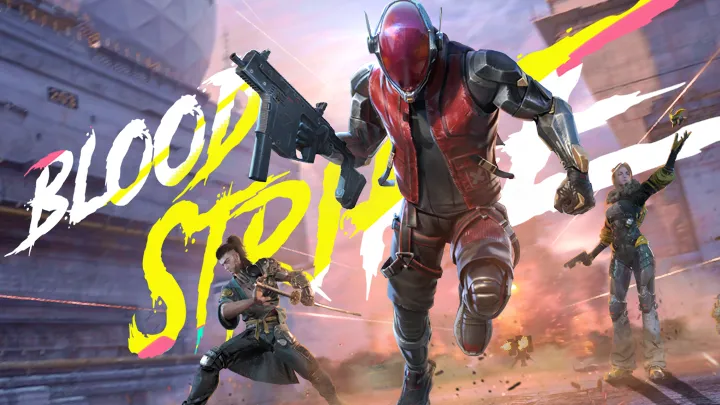
Blood Strike burst onto the mobile battle royale scene with fast-paced gunplay, lightweight file size, and a movement system that rewards aggression over passive camping. Yet for new players arriving from other shooters, the game's pacing, looting structure, and squad mechanics can feel disorienting in the first few matches. This guide walks through exactly how to build competence in Blood Strike, step by step, from your very first drop to climbing the ranked ladder. Rather than offering vague tips, each section below focuses on concrete actions you can take immediately, in the order you'll actually encounter them during a typical match and a typical career in the game.
How to Set Up Your Controls Before Your First Match
Before queuing into a single match, the most important "how to" step is configuring your control scheme correctly, because Blood Strike's default touch layout is not optimized for fast reaction times. Go into Settings before playing and switch to a four-finger or claw-style layout if your device supports it, separating fire, aim, jump, and crouch into distinct zones so you never need to lift a thumb to perform a second action.
Sensitivity tuning matters just as much as button placement. Lower your general look sensitivity slightly below the default, then raise your ADS (aim-down-sights) sensitivity for scopes above 2x, since the default settings often make long-range tracking sluggish while close-range flick shots feel too twitchy.
Recommended Initial Settings Checklist
- Enable Gyroscope for fine aim adjustments during ADS.
- Set fire button size slightly larger than default for faster reaction taps.
- Turn on the four-finger claw layout if your screen size allows it comfortably.
- Disable auto-pickup for ammo types you don't use to avoid inventory clutter.
How to Choose a Drop Zone That Matches Your Skill Level
Once you're in the lobby, the next decision point is the drop location, and how you choose it should depend on whether you're learning the game or trying to win immediately. New players should avoid the most contested named locations shown on the map's hot-drop indicators, since these areas guarantee early firefights against players who already understand weapon spawns and rotations.
Instead, drop slightly off the edge of a popular zone. This gives you access to leftover loot once the initial fight thins out the contested area, while still keeping you close enough to rotate into the loot-rich zone within the first two minutes. As you gain confidence, you can gradually move drop locations closer to the center of hot zones to practice early-game combat under pressure.
Drop Zone Categories
- Hot Zones: High player density, high loot quality, high early risk.
- Warm Zones: Moderate density, good loot, manageable risk for intermediate players.
- Cold Zones: Low density, basic loot, ideal for learning movement and map awareness safely.
How to Loot Efficiently in the First Ninety Seconds
Looting speed determines whether you're prepared for the first encounter or caught in your inventory menu when an enemy appears. The correct approach is to prioritize a weapon and a partial ammo stack first, before worrying about armor, healing items, or attachments, because a weapon with even a few bullets gives you a fighting chance, while armor without a gun does nothing.
After securing a primary weapon, immediately check for a secondary weapon of a different range category, ideally pairing a close-range SMG or shotgun with a mid-to-long-range rifle. This range coverage matters more in the early game than maximizing armor tier, since you cannot predict whether your first fight will happen at five meters or fifty.
Looting Priority Order
- Primary weapon (any usable rarity).
- Matching ammo type, even a partial stack.
- Secondary weapon covering a different engagement range.
- Armor vest, any tier.
- Healing items (bandages or medkits).
- Attachments matching your equipped weapons.
How to Read the Early-Game Safe Zone and Plan Rotations
Once your initial loot pass is complete, attention should shift to the safe zone shrink pattern. Blood Strike's zone tends to favor a directional pull rather than a fully random one in many matches, meaning players who watch the first two zone reveals carefully can predict general rotation direction earlier than the minimap explicitly tells them.
The correct habit here is to begin moving toward the zone's edge before the timer runs low, rather than waiting until the last thirty seconds. Players who rotate early avoid the dangerous "final dash" through open terrain that exposes them to snipers and third-party squads who are already positioned along common rotation paths.
Common Rotation Mistakes to Avoid
- Waiting until the zone timer is under one minute to start moving.
- Rotating through open fields instead of using terrain cover or buildings.
- Ignoring vehicle availability when a rotation distance exceeds typical sprint range.
How to Engage in Mid-Game Firefights Without Overextending
The mid-game phase, once the player count drops below roughly twenty, is where positioning discipline becomes more important than raw aim. The correct approach when you hear distant gunfire is not to immediately rush toward it, but to assess whether the fight is already being fought by two other squads, since pushing into an active three-way fight often gets you killed by whichever team wins the first exchange.
Instead, use this phase to reposition toward high ground or defensible structures near the next likely zone center. Engaging only when you have a clear numbers or positional advantage, such as catching an enemy squad reloading or healing, dramatically increases your survival rate compared to contesting every gunfight you hear.
Signs a Fight Is Worth Joining
- You can see the enemy is already low on health or out of cover.
- Your squad has a clear flanking angle unseen by the engaged players.
- The fight is happening near your intended rotation path anyway.
How to Use Squad Communication and Roles Effectively
In squad modes, how you divide responsibilities among teammates often matters more than individual mechanical skill. Assigning informal roles, such as one player focusing on scouting with a long-range weapon, one player on close-range entry, and one player managing utility items like smoke or flashbangs, creates a coordinated unit rather than three individuals shooting in the same general direction.
Voice or quick-chat callouts should focus on three things consistently: enemy direction, enemy count, and your own health or ammo status. Squads that callout enemy direction using clock positions relative to your character's facing direction resolve fights faster than squads relying on vague directions like "over there."
Effective Callout Structure
- Direction: "Enemy at my 2 o'clock."
- Distance: "Close range, inside the building."
- Status: "I'm reloading, cover me."
How to Adapt Your Loadout as the Match Progresses
By the time you reach the final third of the lobby, your loadout should no longer resemble what you picked up in the first two minutes. The correct habit is to continuously upgrade weapon rarity and attachments whenever you defeat an enemy or pass a loot-dense area, rather than sticking stubbornly with your starting weapons out of familiarity.
Pay particular attention to attachment slots, since a high-rarity weapon without a scope, grip, or extended magazine often underperforms a lower-rarity weapon that's fully kitted. Prioritize attachments that reduce recoil and improve ADS speed over purely cosmetic or minor stat changes when inventory space is limited.
How to Survive the Late-Game Circle With Limited Cover
As the safe zone shrinks into its final stages, available cover becomes scarce, and this is where many players lose matches they were otherwise winning. The correct approach is to identify and claim defensible terrain, such as rock formations, building corners, or elevation changes, before the zone forces everyone into the same small area.
Holding a position with your back protected and a clear sightline on likely approach angles is generally stronger than constantly repositioning in the open late-game circle. If your squad is forced into open ground, using smoke grenades to create temporary cover while rotating to better terrain is far safer than sprinting across exposed space hoping to avoid gunfire.
Late-Game Positioning Priorities
- Secure terrain with at least one protected flank.
- Maintain sightlines on the most likely enemy approach direction.
- Keep utility items in reserve specifically for final-circle repositioning.
How to Close Out Endgame Fights for the Win
The final one-versus-one or squad-versus-squad confrontation typically comes down to who controls high ground and who manages their healing items more efficiently under pressure. The correct approach is to commit to aggressive pushes only after confirming an enemy's healing animation has started, since interrupting a heal often guarantees a kill that an even gunfight would not.
Equally important is resource discipline. Players who burn through all their healing items mid-fight, rather than rationing between exchanges, frequently lose final circles to opponents who held a single medkit in reserve for the last crucial moment. Tracking your remaining healing and ammo count throughout the final fight, rather than only reacting to health bar changes, leads to more consistent endgame wins.
How to Improve Long-Term Through Post-Match Review
Winning consistently in Blood Strike isn't only about in-match decisions; it also depends on how you review your performance afterward. After each match, checking your post-game statistics, particularly accuracy percentage, damage dealt versus damage taken, and time spent in combat versus time spent looting, reveals specific habits worth correcting.
Players serious about climbing the ranked ladder should track these statistics over multiple sessions rather than judging performance from a single match. A consistent pattern, such as low accuracy at long range or frequent deaths during rotations, points directly to which specific skill from the sections above deserves the most practice in your next session.
Key Stats Worth Tracking Over Time
- Accuracy percentage by weapon range category.
- Average survival time per match.
- Number of rotation-related deaths versus fight-related deaths.
- Healing items used per match versus items available.
Mastering Blood Strike is less about any single flashy mechanic and more about layering disciplined habits on top of each other, from control setup before the match even begins to resource management in the final circle. Each phase of a match rewards a different specific skill: careful looting early, positional patience in the middle, and resource discipline at the end. Players who treat these phases as distinct skills to practice individually, rather than trying to improve everything at once, tend to see the fastest and most lasting improvement in their win rate and overall rank.
Summary: A step-by-step Blood Strike guide covering controls, looting, rotations, squad roles, and late-game tactics to win more matches.